
How to identify AI-generated content
How to identify AI-generated content
Every day, thousands of articles, blogs, and paragraphs are written by AI and LLMs (large language models). Have you ever thought about how we can differentiate them? What rules do LLM systems follow to generate text? How do they choose the words and sentences? In this blog, we are gonna dive deeply and discover how AI systems work to produce content.
How Human and LLM systems think?
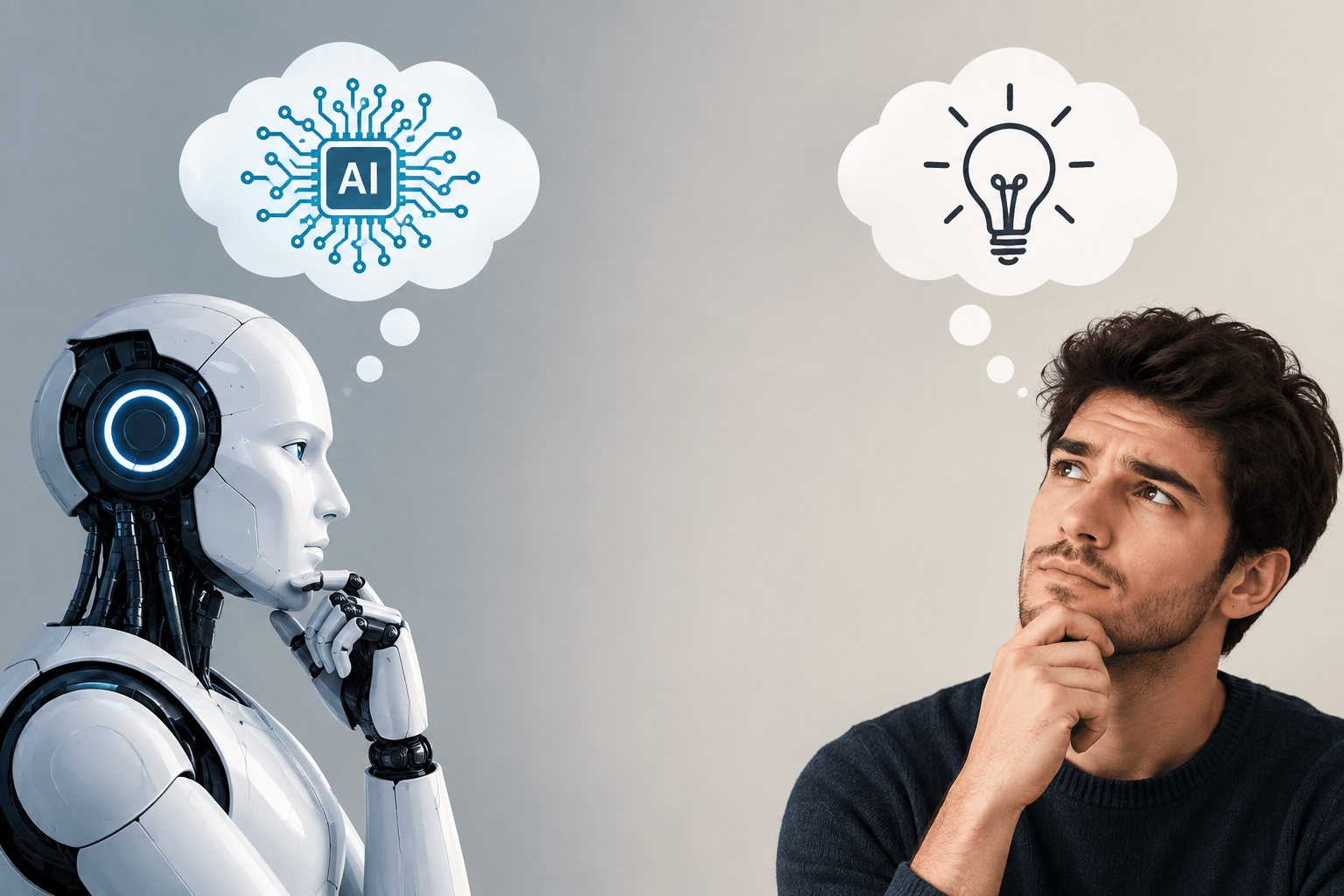
First, we need to understand how both of the systems think. Let’s say a person (writer) writes an article. They have their own memory, ideology, choices, and opinions, and they don’t have any restrictions. They can write whatever comes to their mind and memory. On the other side, an AI has its memory (database), rules, patterns, and instructions that it requires to accomplish a task. It involves steps like (Tokenization, Vector Embeddings, Positional Encoding, Prediction etc).
As you understand how both systems think, there might be a question in your mind: if AI and humans both think almost the same, then why is the content they produce sometimes different, and how can we detect that? What makes them different? The answer is super simple: there is something called patterns. According to the Cambridge Dictionary, a pattern is a particular way in which something is done, organized, or happens. They work on models that repeat the design, structure, or a regular way to complete a task. If you’re able to recognize those patterns and behaviors that are continuously repeated, it’s no longer difficult for you to differentiate them.
How you can identify the Human and AI-generated content
There is no clear evidence that can identify which is LLM-generated or human-generated, because AI can also write as humans do and vice versa, but by looking at a few factors and patterns that are frequently repeated, we are able to understand that at some level.
Below are the few patterns that could be noticeable in AI and LLM-generated text:
1. Predictable Transitions
AI-generated text often naturally uses transitions such as:
- However,
- Moreover,
- In addition,
- For example,
- This means that…
- Ultimately,
A writer may connect ideas without explicitly signaling every relationship.
2. Equally Balanced Sentences
Equally balanced sentences are a common pattern in AI-generated writing, such as:
- If … then…
- Not only … but also…
- …that…
You can notice that each sentence clearly maintains its meaning. For example, look at this paragraph generated by ChatGPT:
“Fruits are an important part of a healthy and balanced diet. They are rich in essential vitamins, minerals, fiber, and antioxidants that help keep our body strong and healthy. Eating fruits regularly can improve digestion, support the immune system, provide natural energy, and help maintain healthy skin. Fruits such as apples, oranges, bananas, mangoes, and berries also contain nutrients that support heart health and overall well-being. Including a variety of fresh fruits in our daily diet can help protect the body from diseases and keep us active and energetic.”
In the paragraph above, you can clearly see that every sentence maintains its meaning and is connected with words such as “that.” If you read the first part of a sentence, the next part is often predictable.
3. Other Noticeable Factors
Other factors that can be noticeable in AI-generated text are:
- No grammar mistakes
- Usually formal writing
- Frequent use of dashes (—)
- Similar sentence lengths
- Symmetrical structure (introduction, details, conclusion)
- etc.
With frequent practice and reading, you will learn to identify and clearly differentiate between them.
Watch video and learn more about it.